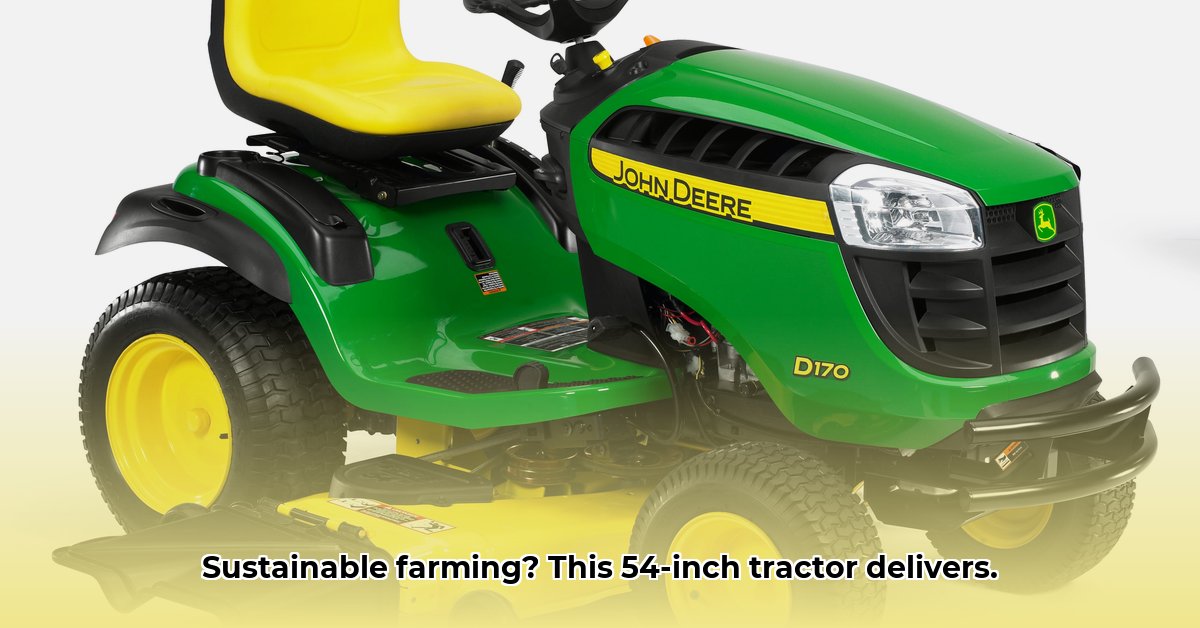
Cub Cadet XT1 ST54: A Sustainability Assessment
This review assesses the Cub Cadet XT1 ST54 54-inch lawn tractor's suitability for sustainable agriculture, focusing on fuel efficiency, environmental impact, and lifecycle considerations. While offering powerful performance, its overall sustainability remains inconclusive due to limited publicly available data. For more information on compatible attachments, see this helpful resource: Lawn Tractor Attachments.
Product Overview: The Cub Cadet XT1 ST54
The Cub Cadet XT1 ST54 is a gas-powered lawn tractor featuring a 24 horsepower Kohler engine and a 54-inch cutting deck. Manufacturer specifications indicate a robust build, potentially contributing to a longer lifespan, a key factor in sustainability. However, crucial data regarding fuel consumption per acre, manufacturing emissions, and material sourcing remains unavailable, hindering a complete assessment. Further details on the mower’s features such as its transmission type, cutting height adjustments, and included accessories are needed to provide a comprehensive overview.
Sustainability Analysis: A Critical Examination
Assessing the XT1 ST54's sustainability requires a multifaceted approach examining fuel efficiency, environmental impact, and lifecycle assessment.
Fuel Efficiency: The Missing Data
A critical gap in assessing the XT1 ST54’s sustainability is the absence of manufacturer-provided data on fuel consumption per acre. This metric is essential for comparing its efficiency to alternative mowing technologies. Independent testing is required to determine its real-world fuel efficiency and to address the question: How does the XT1 ST54's fuel consumption compare to electric or other lower-emission alternatives?
Environmental Impact: Unquantified Emissions
The manufacturer's lack of transparency concerning greenhouse gas emissions throughout the mower's lifecycle poses a significant challenge. Data on manufacturing emissions, operational emissions (during mowing), and end-of-life disposal are all missing. Without this crucial information, it is impossible to accurately quantify the mower’s overall environmental footprint. What steps can the manufacturer take to increase transparency around their environmental impact? This lack of transparency raises serious concerns about the claimed environmental friendliness of this product.
Lifecycle Assessment (LCA): A Holistic View
A comprehensive lifecycle assessment is crucial for understanding the XT1 ST54's true sustainability. This requires data on the materials used in its construction, their source, recyclability, and the energy consumed during manufacturing, transportation and disposal. The mower’s anticipated lifespan, maintenance needs, and potential for repairs also factor into this assessment. How can a robust LCA be conducted to assess the long-term environmental impact of the XT1 ST54?
Comparative Analysis: The Need for Benchmarking
A comprehensive sustainability assessment necessitates a comparative analysis of the XT1 ST54 against other mowing technologies. Comparing fuel efficiency (gallons per acre), greenhouse gas emissions, and lifecycle costs against electric, robotic, or other gas-powered mowers would provide a more informed evaluation. This comparison is currently impossible due to the lack of readily available data.
Actionable Recommendations: A Path Forward
For Small-Scale Farm Operators:
- Conduct independent fuel consumption tests: Measure fuel usage over a known mowing area to establish real-world fuel efficiency.
- Explore alternative fuels: Investigate the feasibility of using biodiesel or other renewable fuels to reduce reliance on fossil fuels.
- Prioritize maintenance: Regular maintenance extends the mower's lifespan, reducing the frequency of replacements.
For Equipment Manufacturers (e.g., Cub Cadet):
- Publish complete lifecycle data: Provide transparent data on emissions, material sourcing, and disposal methods.
- Invest in sustainable R&D: Develop more energy-efficient engines, explore hybrid or electric options, and utilize recycled materials.
- Communicate clearly: Use plain language to communicate the environmental footprint of the product to consumers.
For Policy Makers:
- Establish standards for emissions and lifecycle assessments: Standardize reporting requirements for agricultural equipment to facilitate direct comparison of models and improve transparency.
- Implement incentives for sustainable technologies: Offer tax credits or subsidies for farmers transitioning to more environmentally friendly equipment.
- Promote research: Fund research into the development and adoption of alternative agricultural equipment technologies.
For Consumers:
- Demand transparency: Inquire about the environmental impact of equipment before purchasing.
- Prioritize longevity: Choose durable equipment that minimizes the need for frequent replacements.
- Support sustainable practices: Advocate for manufacturers to prioritize sustainable technologies and transparent reporting.
Conclusion: Toward Greater Sustainability in Agriculture
The Cub Cadet XT1 ST54's potential for sustainable agriculture is currently hampered by a lack of crucial data. Increased transparency from manufacturers, along with independent testing and regulatory oversight, are vital for enabling informed decisions and fostering a more sustainable future for agricultural equipment. Further research is essential to fully evaluate its sustainability against other options. The absence of key data prevents a definitive conclusion regarding its overall ecological impact.